The Problem: Supporting Different Starting Points within One Store
The requirement was broader than adding a single ring builder.
Yorxs wanted customers to create rings, pendants and earrings. For each type, the buying journey could start with the setting or with the diamond. The earring brief also included selecting diamond pairs.
That meant the website needed to support different routes through related product information. A customer starting with a setting would approach the purchase differently from someone who had already chosen a stone.
The brief also included loose diamonds and ready-to-wear jewelry. These needed to sit alongside the custom builders within the wider store.
The challenge was to give these journeys a consistent presentation while respecting their differences. Each builder needed listing pages, detail pages and a final stage where the selected piece could be reviewed.
Shopify Jewelry Builders with Two Ways to Begin
The project brief defined setting-first and diamond-first paths for rings, pendants and earrings.
That choice is visible in the current Yorxs storefront, which provides both starting points across all three builder categories. Customers can approach the piece from the design they prefer or the stone they want to use.
TPS’s work addressed the interfaces within those journeys, including the screens where customers examined diamond details and reviewed their selections.
The engagement also included attention to how the pages were built. Repeated interface elements and styling needed to support the layout without making the page structure unnecessarily complicated.
This work focused on the practical development behind the visible builder experience.
- Start with a settingRing, pendant or earring design
- Or start with a diamondStone-first selection
- Review the pieceDetail and final-selection pages
Refining the Pendant Builder
TPS simplified the page structure used for the pendant builder’s diamond-detail and final-selection pages.
The changes included removing unnecessary layout elements, using more suitable elements for text and lists, and reducing unused styling.
These updates required corresponding layout adjustments. Changing the structure behind a page can affect how its content is arranged, so the work included the styling needed to keep the interface together.
The pendant journey was then reviewed as part of the wider interface checks.
This gave the work a specific focus: refining the pages customers moved through while examining a diamond and reviewing the pendant they were creating.
Improving the Earring Builder across Its Main Steps
The earring builder received similar attention across several stages.
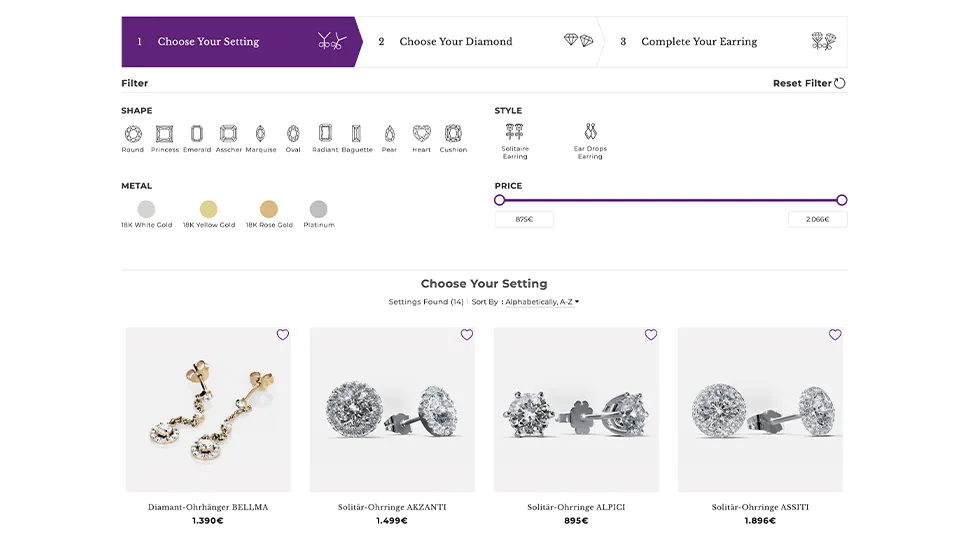
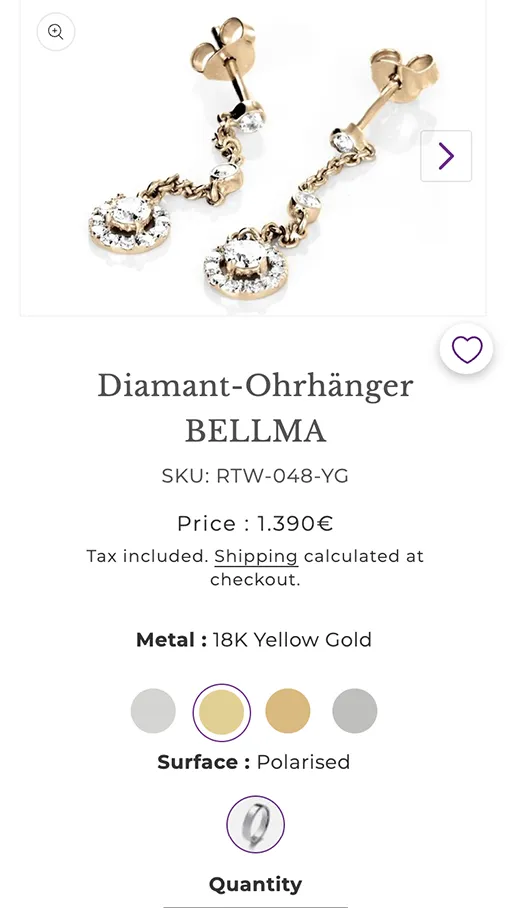
TPS worked on the setting list, setting-detail page, diamond list, diamond-detail page and final-selection page. The changes addressed page structure and styling throughout the sequence.
Working across these stages mattered because the builder was a connected journey. A customer could move from browsing settings to inspecting diamonds and then reviewing the selected piece.
The work also included a correction to the wishlist icon’s position on the final earring page. This addressed a visible interface detail at the point where customers reviewed their selection.
Together, the structural changes and layout corrections covered both the underlying page organization and the controls presented to the shopper.
Checking the Experience across Devices and Languages
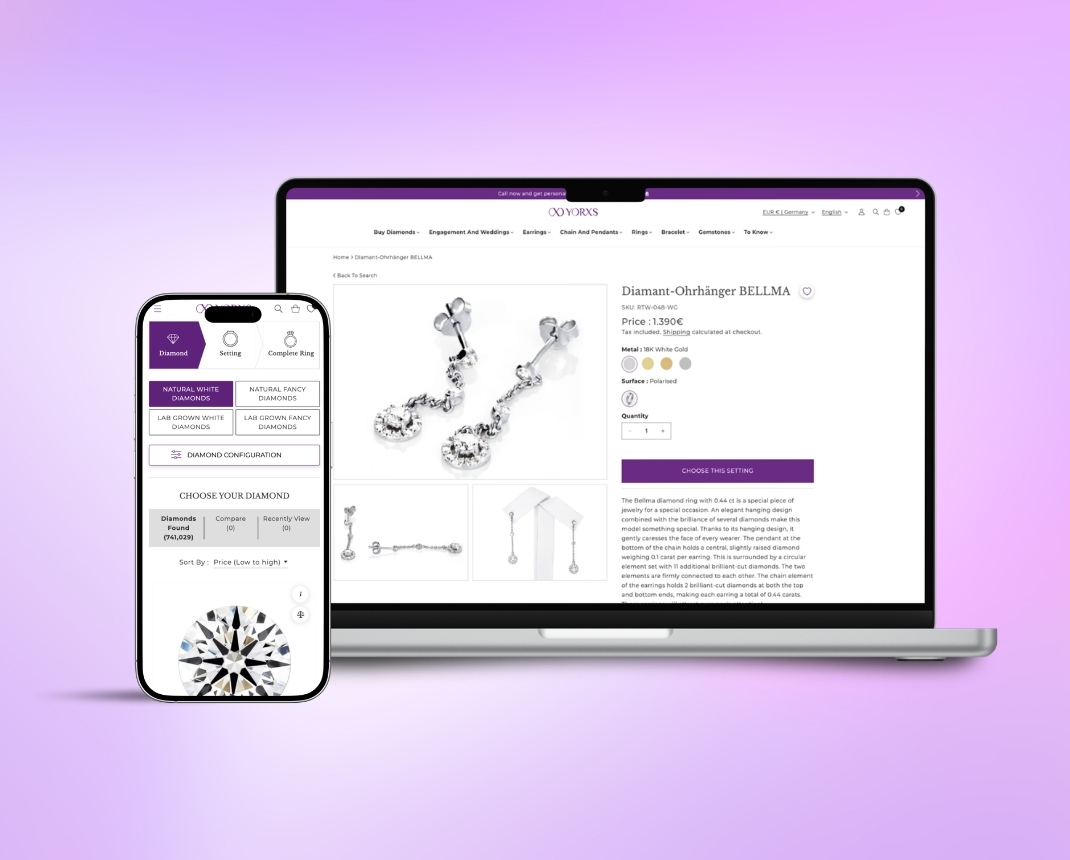
The project required responsive layouts for desktop, tablet and mobile use. TPS reviewed the pendant module and earring-setting listing, including checks of the interface across devices.
Those reviews accompanied the page-structure changes. The aim was to examine how the revised layouts appeared in different amounts of screen space, rather than assume that a desktop layout would behave the same way on a phone.
German and English were also part of the original brief. The current storefront provides both language options, alongside its jewelry categories and builder entry points.
The wider requirement was to preserve a recognizable Yorxs experience while supporting the different products, starting choices and screen sizes involved in shopping for custom jewelry.
The Outcome: Refined Builder Pages within a Broader Shopify Store
TPS completed development work across the pendant and earring builder pages, including structural cleanup, styling changes, interface reviews and a wishlist-position correction.
The current Yorxs website presents ring, pendant and earring journeys with setting-first and diamond-first entry points, giving the project a clear customer-facing context.
The case demonstrates the detail involved in developing jewelry builders beyond their opening screen. Listings, individual product views and final-selection pages all require attention as parts of the same journey.
Planning custom jewelry builders on Shopify? Talk to TPS about your product types, language requirements and the ways customers prefer to begin. We can help define the pages and selection flows needed for your store.
A closer look